The ask
This one didn't arrive as a project. It arrived as a question. One of MNP's CPAs was spending a large part of every engagement doing the same tedious thing: opening business documents one at a time and reading them for the same handful of details — company information, addresses, registration and financial numbers, the metadata buried in each file — then trying to keep all of it somewhere they could retrieve later. It was slow, it was repetitive, and it didn't scale.
So they came to me with an informal, arbitrary ask: could we build something that lets me upload a lot of documents, pull all that data out automatically, and store it safely so I can get it back whenever I need it? No spec, no requirements — just a real problem and the hope that it could be solved.
From ask to plan
I took ownership of that ambiguity. Starting from the CPA's original problem, I ran the discovery myself — gathering the real requirements, understanding how the work actually gets done day to day, and shaping all of that into a clear picture of what the application needed to be.
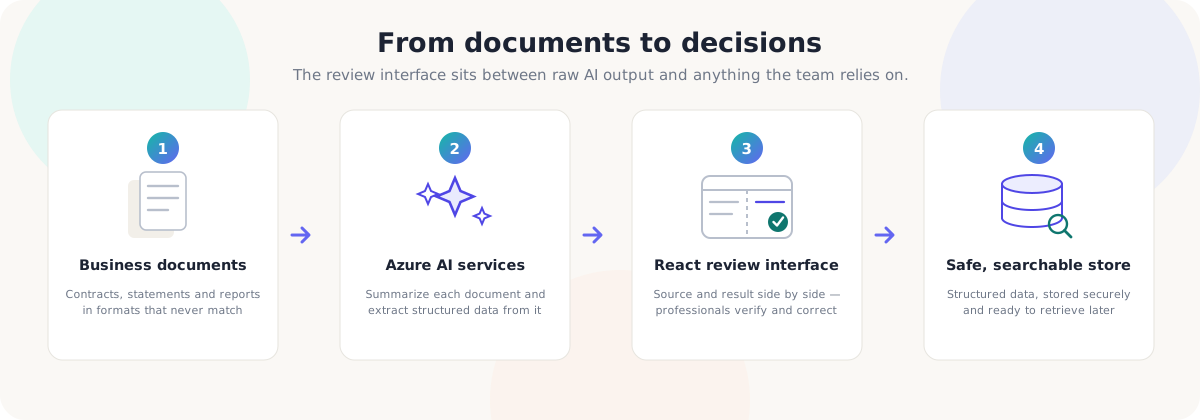
From there I made the architectural decisions: how documents would be ingested, how the AI extraction would run over them, how the extracted data would be stored so it stayed safe and searchable, and how a user would move through the whole thing. I mapped every user flow and usage, and designed the additional features that would make the process genuinely quicker and smoother — not just a faster version of the manual chore, but a better way of working.
What I built
The platform I designed and built turns that original one-line ask into a real, end-to-end workflow:
Bulk document upload
Upload a large batch of business documents at once, instead of opening and reading them one by one.
Automated extraction
Azure AI pulls the details that matter — company information, addresses, registration and financial numbers, and metadata — straight out of each document.
Safe, searchable storage
Extracted data is stored in a structured database that keeps it secure and, just as importantly, easy to retrieve whenever it's needed again.
Review before you trust
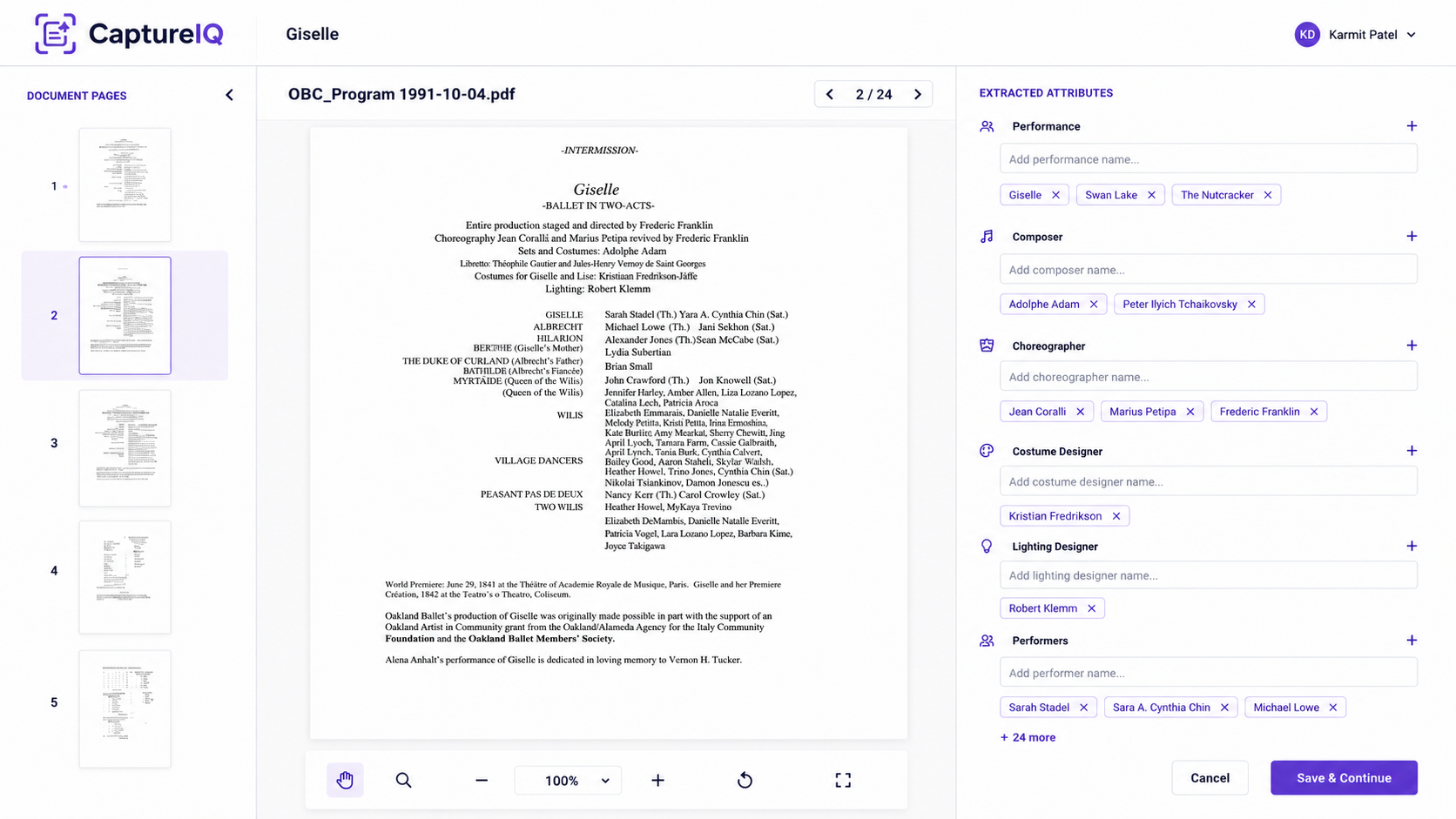
A React interface lets the user check and correct what the AI found before relying on it — extraction with a human still in the loop.
End to end
What I'm proudest of on this one is the scope of ownership. I walked the project through every stage — from that first informal conversation and the information gathering that followed, through the requirements, the architecture, the user flows and the build, all the way to deployment and ongoing maintenance. One person, from the problem to the running product.
It's in production for internal teams today, and because it's built on client-confidential work, the specifics — screens, data, and workflows — stay behind the firewall.
Have a Problem That Isn't a Spec Yet?
The best projects often start as a rough question, not a requirements document. I'm happy to take an ambiguous ask and own it all the way to something real and maintained.